Staring at a map of Sydney and wondering which ride to take? This sydney public transport guide shows how metro, train, bus, ferry and light rail fit together, and says to plan each trip in the Transport for NSW Trip Planner.
This page is part of the wider set of guides on living in sydney.
| Item | Value |
|---|---|
| Modes in the network | Metro, train, bus, ferry and light rail |
| Sydney Metro length | 66 km, 31 stations |
| Southwest Metro open to all passengers | 30 October 2026 |
| Suburban train hours | 4am to around 1am, seven days a week |
| Opal rollout completed | December 2014 |
| Bus share of weekday journeys | About half |
The figures above come from Transport for NSW’s news page and the Wikipedia page on transport in Sydney. Openings, timetables and fares can change, so check the source before you rely on them.
What does the Sydney network include?
The network covers metro, train, bus, ferry and light rail, according to the Wikipedia overview of transport in Sydney. Transport for NSW lists tickets and fares for metro, train, bus, ferry, light rail and coach on one site, so you can plan every mode in one place.
Buses carry the biggest share of riders. Commuter bus services account for about half of the public transport journeys taken in the city on weekdays, and private operators run them under contract to Transport for NSW.
A rough way to match a mode to a trip:
- Metro: a fully automated line from Tallawong to Bankstown via the central business district.
- Train: suburban lines, most of which run through the city underground.
- Bus: routes with three-digit numbers, plus T-ways for faster corridors.
- Ferry: services from wharves, which the Trip Planner lists alongside stations and stops.
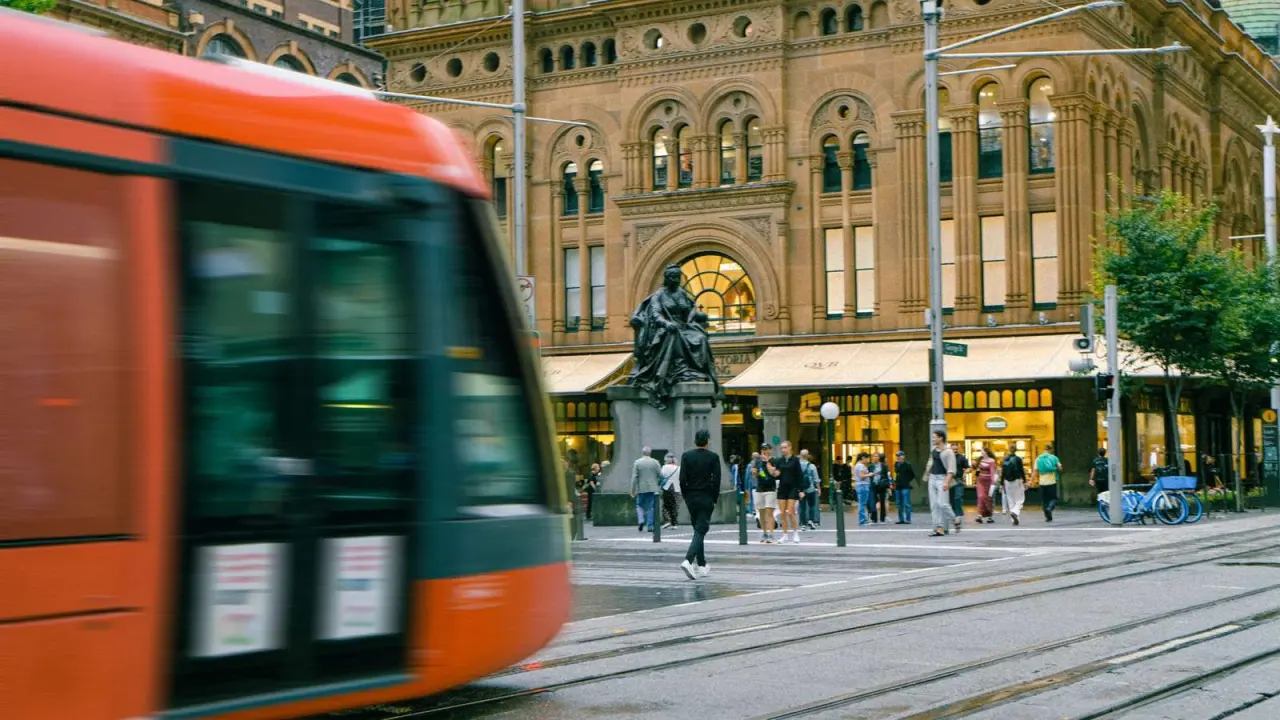
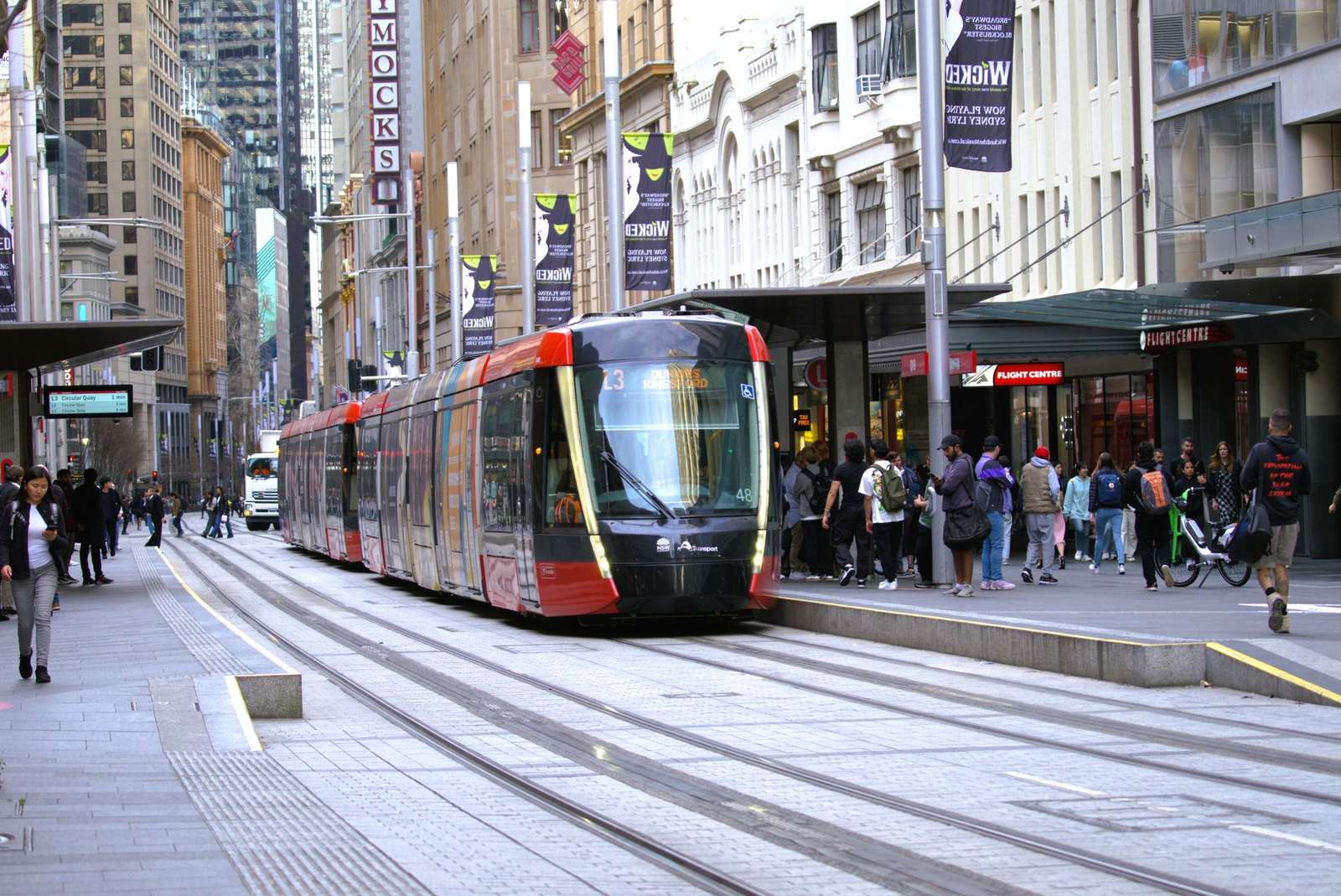
- Light rail: separate lines such as L1 Dulwich Hill and L4 Westmead and Carlingford.
Trains and the metro
Suburban trains run from 4am until around 1am seven days a week, with Nightride bus services covering the network when trains are not operating, according to Wikipedia’s transport page. City trains consist of eight double deck carriages, and fares are calculated on the basis of distance travelled.
Longer trips use NSW TrainLink interurban trains, which leave from Central railway station for these areas:
- The Illawarra
- The Southern Highlands
- The Blue Mountains
- The Central Coast
- Newcastle
The Sydney Metro opened in stages from 2019 to 2026 and runs from Tallawong to Bankstown. With the third phase it has 66 km of twin track and 31 stations, per Wikipedia.
As of Transport for NSW’s 30 October 2026 news item, the Southwest Metro is open to all passengers. That makes the metro worth a look if you are heading to the south-west.
Check the timetable before a weekend trip. As of Transport for NSW’s 14 October 2026 update, the proposed timetable changes due to start on 15 November will no longer go ahead, so train services continue on the current timetable (source).
Buses, ferries and light rail
Buses fill the gaps between rail lines. Wikipedia notes that the Liverpool-Parramatta T-way opened in 2003 and the North-West T-way in 2007 (source).
Bus timetables are also changing right now. Transport for NSW says that from Sunday 15 November through to December 2026 it is changing some bus services across Greater Sydney, Outer Metropolitan and Regional NSW (its 4 November 2026 item).
Ferries sit on the same fares page as the other modes. The Trip Planner covers stations, stops and wharves, so you can search for a ferry the same way you search for a train.
Light rail has its own lines, and they close for maintenance from time to time. Transport for NSW’s 4 November 2026 notice says L4 Westmead and Carlingford Line services will be affected by closures from Wednesday 18 to Sunday 22 November.
Paying with Opal
Transport for NSW services use the Opal ticketing system. The contactless rollout started in December 2012 and completed in December 2014, and fares are set by the Government of New South Wales (Wikipedia).
Unused cards can expire. On 15 October 2025, Transport for NSW reported an announcement that dormant Opal cards, meaning cards not tapped on for five years or more, will be cancelled and the remaining funds reinvested (2025 news page).
The separate explainer on how does opal card work covers tapping on and off in more detail.
Planning trips to galleries and around disruption
Many gallery and museum visits start with a train or ferry. Transport for NSW says Powerhouse Parramatta, on the foreshore of the Parramatta River, is well connected to Sydney’s transport network (21 October 2026 item).
A simple routine keeps a day out on track:
- Enter your start point and destination in the Trip Planner.
- Check alerts and trackwork for the day you are travelling.
- Look at the forecast, since rain or heat changes how appealing a ferry or a long walk is.
- Leave extra time if a bus, train or light rail line has planned works.
Weather matters more than most visitors expect, and sydney weather by month shows what to pack across the year.
One rule is worth knowing before you board. Transport for NSW’s 22 October 2025 update says converted e-bikes are banned from NSW trains from 1 November 2025 to reduce fire risk (source).
Frequently asked questions
Do trains run all night in Sydney?
Show answer
No. According to Wikipedia, suburban trains run from 4am until around 1am, and Nightride buses cover the network when trains are not operating.
Is the train timetable changing on 15 November?
Show answer
As of Transport for NSW’s 14 October 2026 update, the proposed timetable changes due to start on 15 November will no longer go ahead. Trains continue on the current timetable (source).
Can I ride the Southwest Metro yet?
Show answer
Yes, going by the opening notice Transport for NSW posted on 30 October 2026 (source). Use the Trip Planner to see how it links with your route.
Can I bring an e-bike on a train?
Show answer
Converted e-bikes are banned from NSW trains from 1 November 2025, as Transport for NSW’s 22 October 2025 update explains (source). Check the latest rules before you travel with any e-bike.
Where do I check for trackwork?
Show answer
Transport for NSW’s planning pages include the Trip Planner and alerts and trackwork, as shown on its news page.