Curious how Sydney’s galleries got here? The short Sydney art scene history: Aboriginal engraving came first, a public gallery opened in 1880, and a harbourside expansion followed in 2022. You’ll find the key dates below.
This guide is part of our living in sydney series.
| Milestone | Date or figure |
|---|---|
| New South Wales Academy of Art founded | 1872 |
| Art Gallery of New South Wales officially opened | 22 September 1880 |
| Pukumani grave posts shown in the Grand Courts | 1959 |
| Yiribana gallery opened | 1994 |
| Dedicated Asian Gallery opened | 2003 |
| Visitors to the Art Gallery of New South Wales | 2,032,098 (2023-24) |
These dates and the visitor count come from Wikipedia’s Art Gallery of New South Wales entry and The Art Newspaper’s 2022 history of the gallery. Figures can change, so check the source before you rely on them.
Before the galleries: Sydney’s first art
The oldest art in Sydney is rock art. A history of the city’s art on The Art Bog describes carvings in sandstone platforms and paintings in rock shelters made by the Dharawal, Dharug and Guringai peoples long before European arrival.
The same source says artists used pointed stones or shells to incise outlines into the sandstone. It counts more than 800 documented rock art sites in Dharawal country alone, south toward the Illawarra.
Protection came late. According to that history, Aboriginal heritage sites in New South Wales received minimal legal protection until the 1970s, and many carvings were lost to roads, suburbs and construction.
The first European images of the place were not made by professional artists either. The same source notes they were drawn by sailors, surveyors and naturalists who came to chart and catalogue the colony.
How did a public gallery begin in the 1870s?
The story of Sydney’s public art institutions starts with a meeting. On 24 April 1871 a public gathering was called to set up an Academy of Art, and the New South Wales Academy of Art was founded in 1872, according to Wikipedia’s entry on the Art Gallery of New South Wales.
The aim was to help living artists. Steven Miller of the gallery’s archive told The Art Newspaper that the founders organised annual shows to help artists find buyers, and the first purchase went to Conrad Martens, the colony’s most senior living artist, who was ill and struggling financially.
That watercolour, Apsley Falls, cost £50 out of the first government grant of £500, Wikipedia records. The collection moved in 1879 to a wooden annexe built for the Sydney International Exhibition in the Domain, and the Art Gallery of New South Wales was officially opened there on 22 September 1880.
Access mattered from the start. In 1882 the trustees opened the gallery on Sunday afternoons from 2 pm to 5 pm, and the same year a fire destroyed the Garden Palace, which pushed the government to find the collection a permanent home, per the same Wikipedia entry.
A sandstone home and record crowds
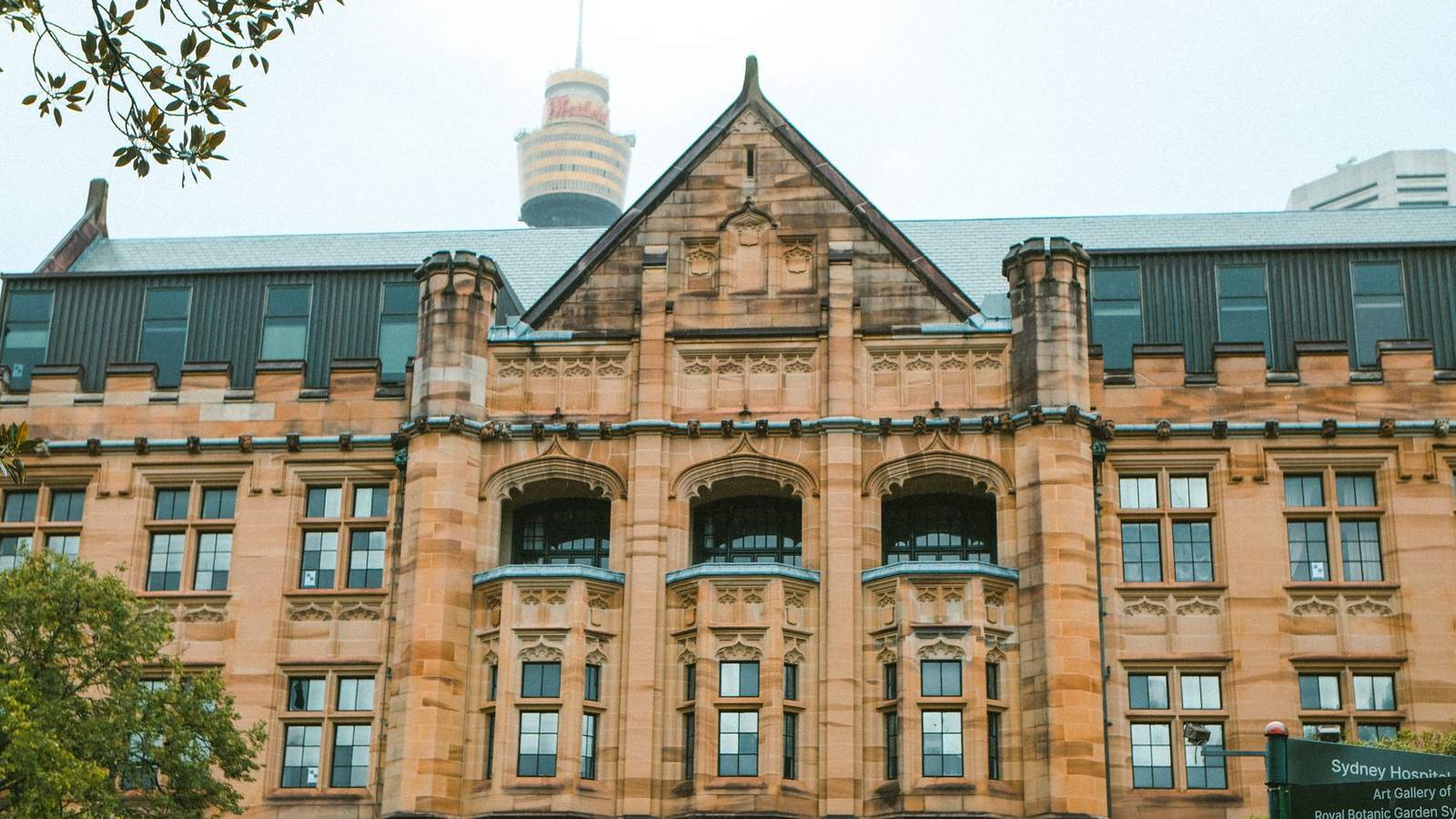
The Art Newspaper dates the building of the gallery’s sandstone home to between 1896 and 1909, on a hill overlooking the harbour. Walter Liberty Vernon designed it, and Wikipedia adds that two picture galleries opened in 1897 and a further two in 1899 (The Art Newspaper; Wikipedia).
The earlier annexe was the first freestanding public art gallery in Australia, which set Sydney apart from other states where galleries shared premises with the library and museum. The Art Newspaper also shows a 1906 photograph of record crowds queuing to see Holman Hunt’s The Light of the World.
That popularity tells you something about the city’s early appetite for art. Visitors were not just locals with a taste for painting but crowds drawn by a single famous picture on loan.
Waking up to Indigenous art in the twentieth century
For decades the focus stayed on European and colonial work, but a few moments shifted the scene. These are the milestones that The Art Newspaper and Wikipedia single out:
- The 1930s and 40s: the gallery pioneered multi-lender solo shows of living Australian artists, starting with Arthur Streeton in 1931 (The Art Newspaper).
- 1959: Pukumani grave posts, made in 1958 by Melville Island artists, went on view in the Grand Courts (The Art Newspaper).
- 1972 and 1988: two building projects that together doubled the gallery’s size (The Art Newspaper).
- 1994: the opening of Yiribana, a space for Aboriginal and Torres Strait Islander art (The Art Newspaper).
- 2003: a dedicated Asian Gallery (Wikipedia).
The 1959 display was the turning point. Placing the posts among the Old Masters made a powerful statement about their status as art, and Tony Tuckson, then deputy director, had travelled to Melville Island to see the artists at work.
As of The Art Newspaper’s November 2022 feature, Yiribana was described as the world’s largest single space devoted to the permanent display of Aboriginal and Torres Strait Islander art and culture.
Sydney Modern and the scene today
According to The Art Newspaper, the gallery celebrated the 150th anniversary of its foundation in 2021, and refurbishments to the original sandstone building commenced. In 2022 it expanded with the Sydney Modern Project, a new building called Naala Badu, according to Sydney.com’s gallery guide.
The gallery is also home to the Archibald Prize, which Maud Page described to The Art Newspaper as over a hundred years old. The wider scene has grown well beyond one building, as Sydney.com’s guide shows:
- Museum of Contemporary Art, at Circular Quay, with a collection of over 4,500 artworks (Sydney.com).
- White Rabbit Gallery in Chippendale, a collection of Chinese contemporary art in a space once a Rolls-Royce service depot in the 1940s (Sydney.com).
- Carriageworks, a multi-arts centre in a historic railway workshop.
- Brett Whiteley Studio in Surry Hills, where the artist lived and worked from 1988 to 1992 (Sydney.com).
- Powerhouse Ultimo, a former power station that opened as a museum in 1988 (Sydney.com).
Notice the pattern: old industrial buildings keep turning into art spaces. That reuse is a large part of how the city’s galleries feel today.
Seeing the history in person
You can walk the story in a day. Wikipedia lists St James and Martin Place stations as a 10 minute walk from the Art Gallery of New South Wales (Wikipedia), and our explainer on how does opal card work is a useful companion when you plan the trip by train or bus.
If the history makes you want to live near the studios and galleries, the guide to sydney suburbs for creatives is a good next read.
Frequently asked questions
When did the Art Gallery of New South Wales open?
Show answer
It was officially opened as the Art Gallery of New South Wales on 22 September 1880, after the collection moved in 1879 to an annexe in the Domain, according to Wikipedia.
What was the gallery’s first purchase?
Show answer
The Art Newspaper says the first purchase was Apsley Falls, a watercolour by Conrad Martens. Wikipedia records its price as £50, paid from the first government grant of £500.
When did Indigenous art enter the main galleries?
Show answer
Pukumani grave posts went on view in the Grand Courts in 1959, and Yiribana opened in 1994, both recorded by The Art Newspaper.
What is Sydney Modern?
Show answer
It is the expansion of the Art Gallery of New South Wales with a new building, Naala Badu, which Sydney.com dates to 2022.